
After storms, leaks and pests
Insulation Removal & Replacement in Galveston, TX
Get wet or contaminated insulation out, let the structure dry, and reinsulate the right way.
- Free estimates after we see the space
- Written quotes listing foam type, thickness and R-value per area
- Moisture, flood damage and air leaks checked before anything is covered
When Old Insulation Has to Come Out
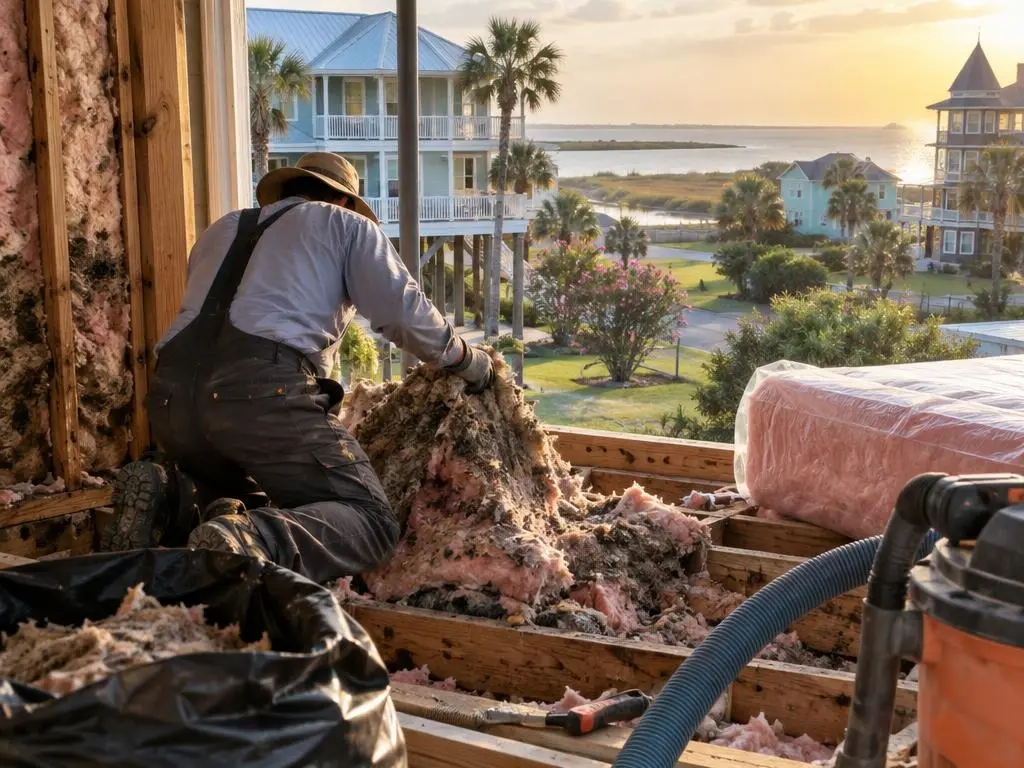
Insulation removal and replacement is often the first step after a storm, a roof leak or a pest problem in Galveston County. Wet insulation holds water against framing and drywall, encourages mold and stops insulating. Insulation fouled by rodents or other pests carries odors and contamination. Adding new material on top of either just hides the problem.
Storms and floods
Hurricane Ike in 2008 and Harvey in 2017 both left many homes in the area with soaked insulation. Under raised floors, wind-driven rain and surge can soak batts. In attics, a damaged roof lets water into the insulation for days before anyone notices. After any of these, we check what got wet, remove it, and give the framing time to dry before reinsulating.
What we remove
We vacuum out loose-fill attic insulation, bag and remove batts from attics, walls and under floors, and cut out damaged foam where needed. Closed-cell foam that stayed intact often does not need to come out, but we check it. Old vermiculite insulation may contain asbestos and is handled by a licensed abatement contractor after testing, not by our crews.
Replacing it right
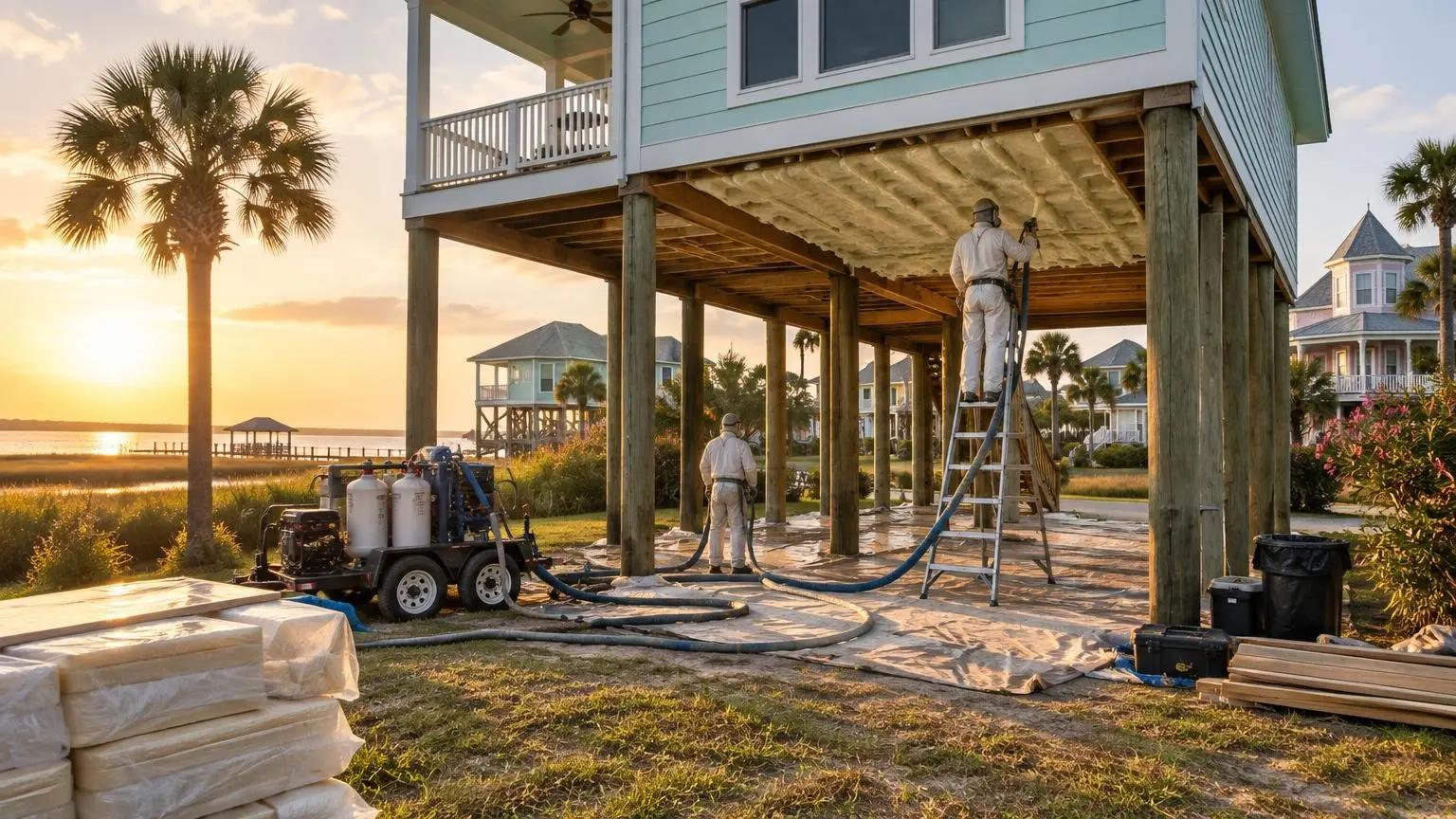
After removal and drying, we reinsulate with material suited to the risk: closed-cell foam under raised floors and below flood elevation, blown-in or foam in the attic depending on the layout, and dense-pack or foam in walls. Air sealing comes before the new insulation.
Signs insulation needs to come out
Stained ceilings, a musty smell in the attic or under the house, batts hanging or lying on the ground under a raised floor, droppings or nesting in the insulation, and insulation that feels damp or matted are all signs. A roof leak that went unnoticed for a while almost always means some attic insulation should be replaced. We check and tell you how much really needs to go.
Cost
HomeAdvisor lists insulation removal at $1 to $2 per square foot, with a typical job of $600 to $1,200 and removal plus replacement averaging about $1,852. Spray foam costs more to remove: $1.00 to $2.50 per square foot (HomeGuide) and up to about $5 hand-chipped (Fixr).
Removal Services
What we take out and why.
Wet attic insulation
Vacuuming out soaked loose fill after roof leaks.
Under-floor batts
Removing fallen or soaked batts from raised homes.
Flood-damaged wall insulation
Removing wet material from opened walls.
Pest-contaminated insulation
Removing fouled material after pest problems are addressed.
Damaged foam
Cutting out foam that is damaged or poorly installed.
Reinsulation
New insulation suited to the space and the risk.
Published Insulation Removal Costs
| Job | Range and source |
|---|---|
| Removal, per sq ft | $1 to $2 (HomeAdvisor) |
| Typical removal job | $600 to $1,200, about $900 average (HomeAdvisor) |
| About 1,000 sq ft | $1,000 to $2,000 (HomeAdvisor) |
| Removal and replacement | About $1,852 average (HomeAdvisor) |
| Spray foam removal | $1.00 to $2.50 per sq ft (HomeGuide); $1.50 to $3, up to about $5 hand-chipped (Fixr) |
| Asbestos removal (abatement firm) | $1,190 to $3,255 (HomeAdvisor) |
National figures from HomeAdvisor (June 2026), HomeGuide (2026) and Fixr (2025). The amount of material, access, contamination and disposal set the cost. What you pay is the figure on your written estimate.
How Removal and Replacement Works
1. Assess the damage
We find what is wet or contaminated and what can stay.
2. Remove
Damaged material is vacuumed or bagged and hauled away.
3. Dry and check
Framing is allowed to dry and checked for damage.
4. Seal and reinsulate
Leaks are sealed and new insulation is installed.
Why Choose Us for Insulation Removal & Replacement
Only what needs to go
We check before removing so you do not pay for unnecessary work.
Drying before insulating
New insulation goes in after the structure has dried.
Asbestos handled correctly
Suspect vermiculite goes to licensed abatement after testing.
Insulation Removal & Replacement Questions
Does wet insulation have to be removed?
Usually. Batts and loose fill that got soaked hold water and lose their value. Intact closed-cell foam may be able to stay after inspection.
How soon after a storm should insulation come out?
As soon as practical, so the framing can start drying and mold does not get a foothold.
Can you remove insulation from under my raised house?
Yes. We take down fallen or soaked batts and netting and reinsulate with closed-cell foam or another suitable option.
What if my attic has vermiculite?
It should be tested before anyone disturbs it. If it contains asbestos, a licensed abatement contractor removes it.
Insulation Removal & Replacement Service Areas
- Spray Foam Insulation in Galveston, TX
- Spray Foam Insulation in Jamaica Beach, TX
- Spray Foam Insulation in Bolivar Peninsula, TX
- Spray Foam Insulation in Tiki Island, TX
- Spray Foam Insulation in Hitchcock, TX
- Spray Foam Insulation in La Marque, TX
- Spray Foam Insulation in Texas City, TX
- Spray Foam Insulation in Santa Fe, TX
- Spray Foam Insulation in Dickinson, TX
- Spray Foam Insulation in League City, TX
- Spray Foam Insulation in Kemah, TX
- Spray Foam Insulation in Clear Lake Shores, TX
- Spray Foam Insulation in Bacliff, TX
- Spray Foam Insulation in San Leon, TX
- Spray Foam Insulation in Friendswood, TX
Get an Insulation Removal & Replacement Estimate
We will assess what got wet or damaged and quote removal and replacement in writing.