
Existing homes and new framing
Wall Insulation in Galveston, TX
Fill empty walls in older island homes and seal open framing in rebuilds and additions.
- Free estimates after we see the space
- Written quotes listing foam type, thickness and R-value per area
- Moisture, flood damage and air leaks checked before anything is covered
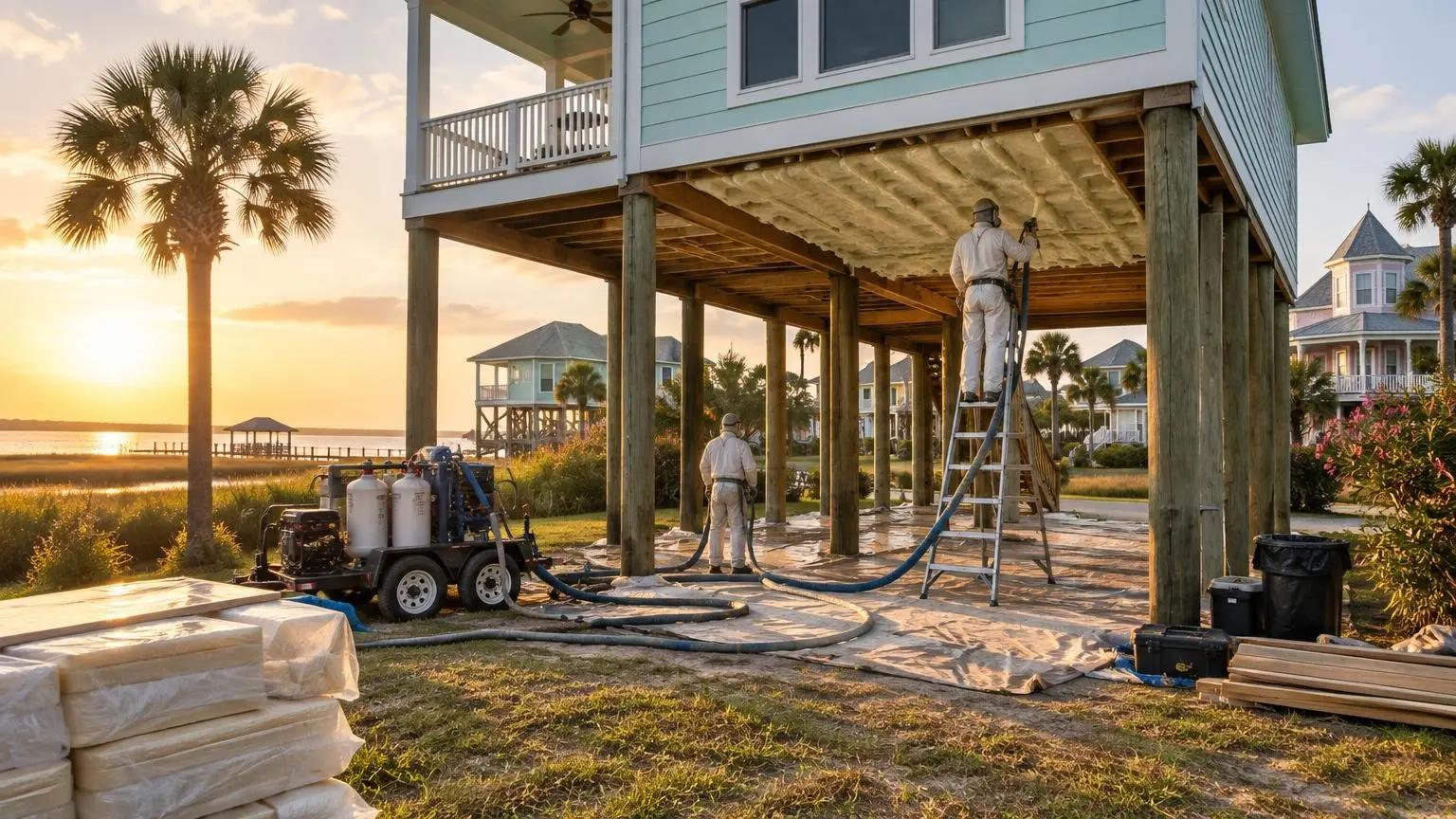
Insulating Walls in Older and Newer Homes
Wall insulation in Galveston County ranges from century-old island homes to houses framed last year. Galveston has six historic districts with more than 60 structures on the National Register, and the East End and Silk Stocking districts hold homes built from the Civil War through World War II. Many of those houses were built with little or no wall insulation. Mainland homes from the 1960s to 1990s often have thin batts with gaps. New homes and post-storm rebuilds are a chance to do the walls right.
Closed walls
When the walls stay closed, we dense-pack cellulose or fiberglass through small holes in each stud bay, from inside or from outside behind siding. Packed tightly, it fills the cavity and slows air movement. HomeGuide lists blown-in exterior wall insulation at $1,900 to $7,800 and dense-pack cellulose at $1.60 to $4.20 per square foot. In historic homes we discuss access with you first, since exterior changes to historic properties in Galveston go before the Landmark Commission.
Open walls
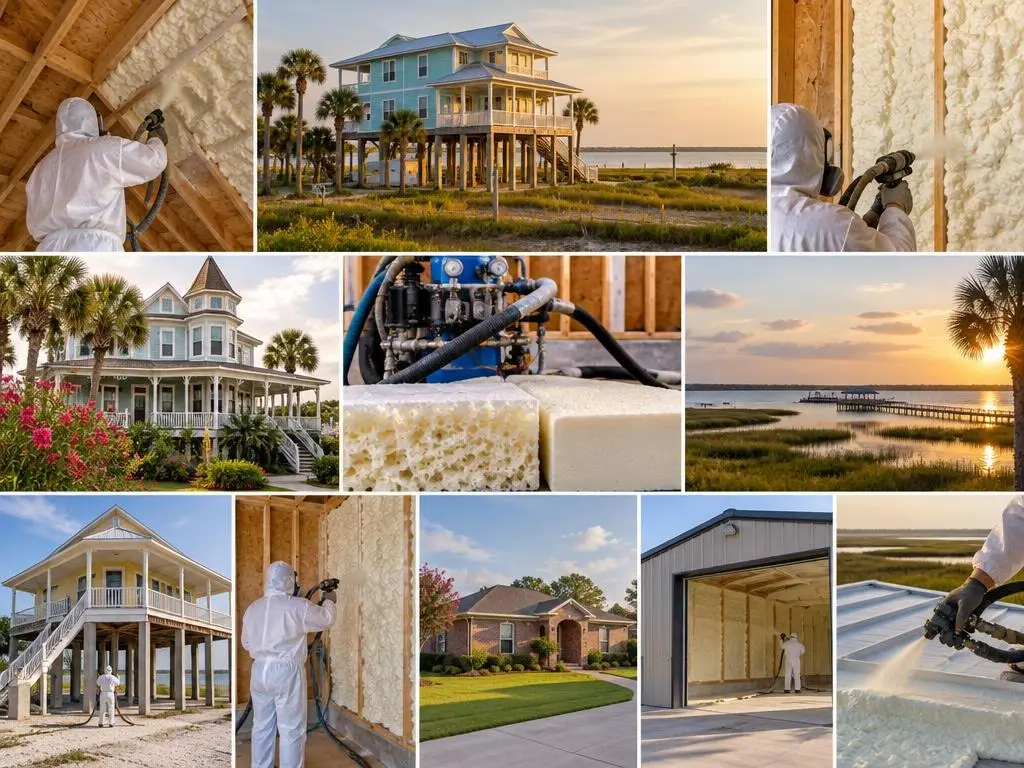
When the studs are open during a remodel, rebuild or new construction, spray foam is the strongest option. Open-cell foam fills the bay and seals around wiring at lower cost; closed-cell gives more R per inch and better water resistance, which is useful in walls below base flood elevation. The Texas code summary lists R-13 for wood-frame walls in Zone 2. Fixr lists new-construction foam at $2.75 to $6.50 per square foot.
Moisture in walls
On the coast, walls see wind-driven rain and humid air. We pay attention to how the wall is built, the house wrap and siding, and whether the material we choose will dry if it ever gets wet.
How we check walls
We look at outlets, check the tops of walls from the attic and sometimes drill a test hole to see what is inside before pricing.
Rebuilds after storms
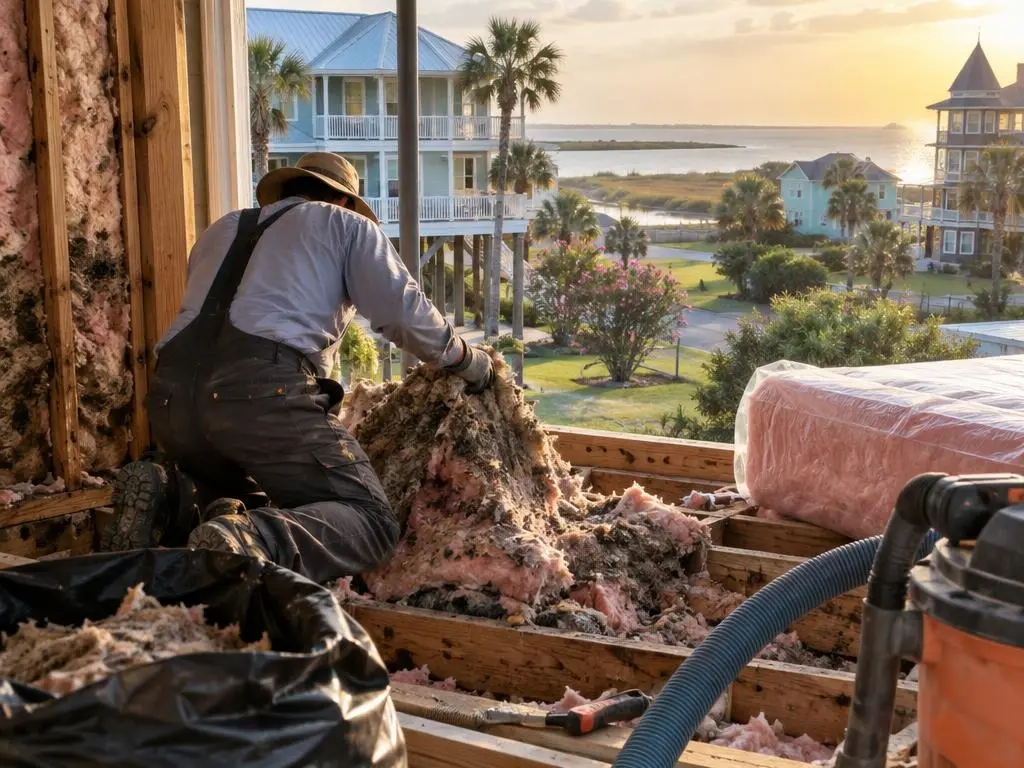
When flood-damaged walls are opened and dried, it is the best time to insulate them properly. Closed-cell foam in the lower part of the wall, where water is most likely to reach, and open-cell foam or batts above it is one common approach. Sealing around outlets, windows and plumbing while the walls are open adds air tightness that is hard to get later.
Wall Insulation Options
The method fits the wall.
Dense-pack cellulose
Blown into closed walls through small holes.
Blown fiberglass
An alternative fill for closed cavities.
Open-cell foam
For open stud bays above flood level.
Closed-cell foam
For walls that need water resistance or higher R per inch.
Rebuild framing
Insulating walls after storm repairs.
Patch and finish
Plugging access holes after blowing.
Published Wall Insulation Costs
| Job | Range and source |
|---|---|
| Blown-in, exterior walls | $1,900 to $7,800, or $1.10 to $3.70 per sq ft (HomeGuide) |
| Blown-in walls | $2,000 to $4,000 (Fixr) |
| Dense-pack cellulose | $1.60 to $4.20 per sq ft (HomeGuide) |
| Spray foam, existing walls | $3.15 to $7.50 per sq ft (Fixr) |
| Spray foam, new construction | $2.75 to $6.50 per sq ft (Fixr) |
| All exterior walls, spray foam | $4,000 to $10,000 (HomeGuide) |
National figures from HomeGuide (2025 and 2026) and Fixr (2025). Siding type, wall height, access and the material chosen change the total. The written estimate we give you is the price.
How a Wall Job Works
1. Check inside
We find out what is in the walls before quoting.
2. Pick the method
Dense-pack for closed walls, foam for open ones.
3. Install
Each bay is filled or sprayed to the specified depth.
4. Finish
Holes are plugged and patched and the area is cleaned.
Why Choose Us for Wall Insulation
Look before drilling
You know what is in the walls first.
Historic homes respected
Access planned with the historic rules in mind.
Flood-aware choices
Closed-cell where walls may see water.
Wall Insulation Questions
Can you insulate walls in a historic Galveston home?
Usually, with dense-pack through small holes. We plan the access with you; exterior changes on historic properties go through the Landmark Commission.
What wall insulation is best after a flood rebuild?
Closed-cell foam is a strong choice for walls that may see water again, since it does not absorb it. Above flood level, open-cell or batts may be fine.
What R-value do walls need in Texas?
The Insulation Institute's Texas summary lists R-13 for wood-frame walls in Climate Zone 2.
Will blowing insulation into walls cause moisture problems?
Not when the wall can dry and leaks are fixed. We look at the siding and wrap before recommending a fill.
Wall Insulation Service Areas
- Spray Foam Insulation in Galveston, TX
- Spray Foam Insulation in Jamaica Beach, TX
- Spray Foam Insulation in Bolivar Peninsula, TX
- Spray Foam Insulation in Tiki Island, TX
- Spray Foam Insulation in Hitchcock, TX
- Spray Foam Insulation in La Marque, TX
- Spray Foam Insulation in Texas City, TX
- Spray Foam Insulation in Santa Fe, TX
- Spray Foam Insulation in Dickinson, TX
- Spray Foam Insulation in League City, TX
- Spray Foam Insulation in Kemah, TX
- Spray Foam Insulation in Clear Lake Shores, TX
- Spray Foam Insulation in Bacliff, TX
- Spray Foam Insulation in San Leon, TX
- Spray Foam Insulation in Friendswood, TX
Get a Wall Insulation Estimate
Tell us whether walls are open or closed and we will quote the right method.